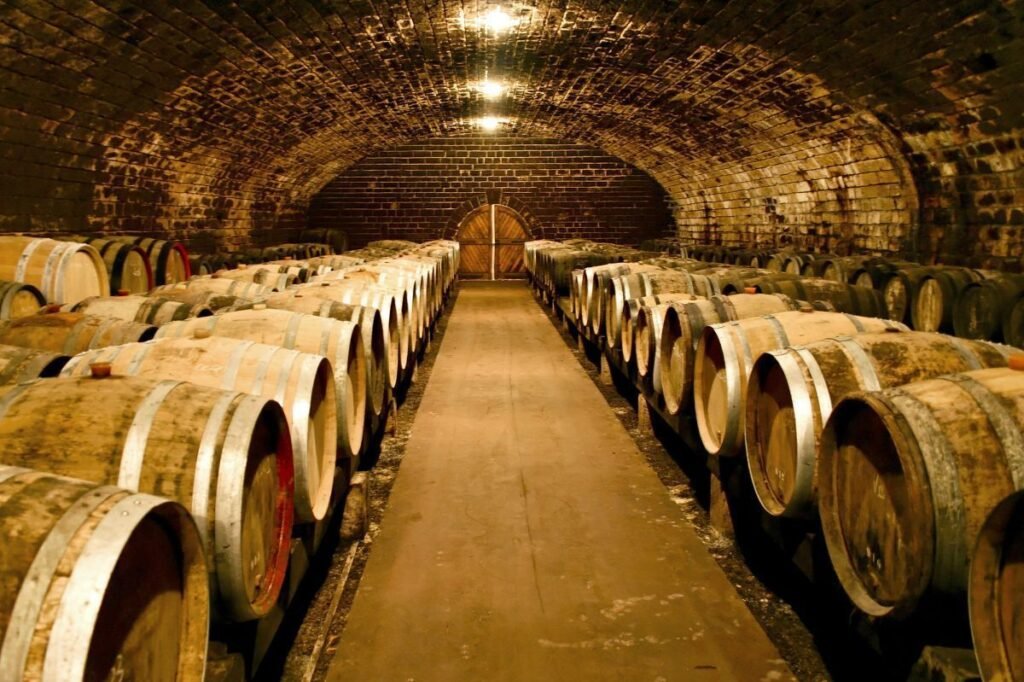
While most travelers instinctively associate premium Italian viticulture with the rolling hills of Tuscany or the geometric ridges of Piedmont, those in search of deeper, more profound experiences are rediscovering a millenary heritage kept right at the gates of Rome. The Castelli Romani, stretching across the fertile volcanic hills that frame the lakes of Albano and Nemi, represent far more than a simple countryside escape. This is a landscape shaped by ancient memories, aristocratic villas, historic vineyards, and seclusive cellars hand-carved into prehistoric tufa rock.
Choosing a wine itinerary in this unique corner of Lazio means stepping into an environment where wine is not merely a tasting note, but a sophisticated cultural narrative. Over the centuries, the intense mineral composition of the volcanic soil, the cooling maritime breezes sweeping in from the Tyrrhenian Sea, and an intimate proximity to Rome have forged a singular agricultural and convivial identity: a noble, discreet countryside, profoundly intertwined with the epic history of the Eternal City.
The sacred bond between the Alban Hills and viticulture traces back to an era when myth, ritual, and power were entirely inseparable. In archaic Rome, wine commanded an immense sacred and social value. It was never treated as a common beverage, but rather as an essential ritual element governed by strict ancestral customs and reserved for the spheres of sacrifice, high authority, and elite convivia.
According to ancient tradition, wine consumption was subject to rigid moral restrictions—particularly for women—underscoring the heavily controlled, almost sacrosanct nature that surrounded the drink during Rome’s foundational centuries. High upon Monte Cavo, known then as Mons Albanus, the early communities of the Latin League gathered to celebrate the Feriae Latinae in honor of Jupiter Latiaris, one of the most vital religious festivals of archaic Latium. In this context, the Alban territory was not merely farmland; it was a theater of worship, political alliance, and collective identity.
With the dawn of the Republican and subsequent Imperial eras, the Alban Hills evolved into the premier sanctuary for the Roman aristocracy. Opulent villas, sweeping suburban residences, and specialized agricultural estates punctuated the hillsides, turning the region into an elegant, strategic refuge. It was perfectly positioned: close enough to Rome to remain instantly connected to the pulse of political power, yet sufficiently secluded to guarantee peace, natural beauty, and social prestige.
The local wine, celebrated across antiquity as Albanum, quickly became a staple of noble Roman hospitality. Alongside other legendary nectars of the ancient world—such as Campanian Falernian and Latium’s own Setinum—Albanum defined the palate of the elite. To offer a wine of such recognized heritage was never a neutral gesture; it was a deliberate statement of culture, high status, and societal belonging.
Latin authors consistently revered the Alban region as a pinnacle of agricultural and viticultural mastery. Plinio the Vecchio (Pliny the Elder), within his monumental Naturalis Historia, repeatedly cited these specific hillsides in his exhaustive encyclopedic repertoire dedicated to nature, agriculture, and the premier wines of the Roman world. His writings stand as a priceless historical validation, proving that the enological fame of the Colli Romani is no modern marketing invention, but the authentic inheritance of an ancient, undisputed reputation.
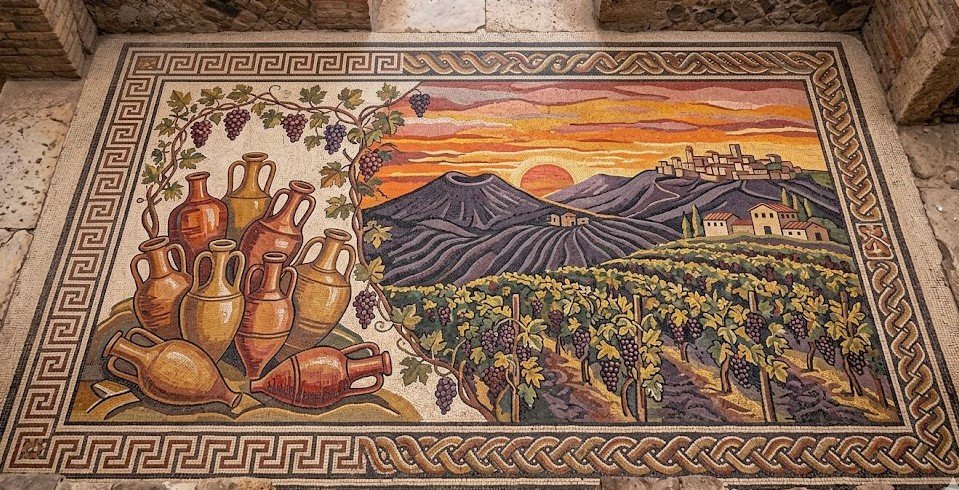
Sipping an exceptional vintage in Latium today requires an understanding of the ancient Roman culture of the convivium. For the Romans, sharing wine was far more than an epicurean pleasure; it was a highly codified social ritual structured by deliberate gestures, meticulous proportions, and strict etiquette.
In aristocratic banquets, wine was rarely consumed pure. It was customary to blend it with water, occasionally perfuming it with rare botanicals or sweetening it with virgin honey to craft the celebrated mulsum, traditionally poured at the very start of the meal. The harmony of this blend was never left to chance. During the commissatio—the intellectual and highly social climax of the banquet—a chosen figure analogous to the magister bibendi governed the exact proportions of water and wine, masterfully directing the rhythm of the entire evening.
This ritual speaks volumes about the Roman mindset. Wine was never intended for mindless inebriation; it was engineered as a catalyst for relationship-building, sophisticated dialogue, and political posturing. Around the dining table, guests debated governance, philosophy, fine art, familial alliances, and personal ambitions. The chalice thus operated as a refined vessel through which power was displayed, measured, and subtly negotiated.
As the centuries progressed, the central importance of Latium’s vineyards shifted seamlessly from imperial Roman villas to papal courts, aristocratic fiefdoms, and the grand dynasties that permanently etched their names into the region’s history. Noble houses such as the Colonna, the Savelli, and the Pallavicini contributed to shaping the landscape of the Castelli Romani, curating a highly cultivated countryside distinguished by majestic residences, historic vineyards, manicured Italian gardens, and subterranean cellars.
Frascati progressively advanced to become the definitive wine representing Roman and pontifical tables. Its exceptional prestige effortlessly traversed the dark ages into the Renaissance, ultimately cementing its place in local lore as the legendary “Wine of the Popes”—an evocative title that captures the profound historical link between this territory, Rome, and the refined art of high-end hosting.
During the golden eras of the Grand Tour and the height of cosmopolitan Rome, the wine of the Castelli captured the imagination of international elite travelers, novelists, and master artists. Frascati and its neighboring hamlets turned into coveted sanctuaries of leisure, intellectual conversation, and sensory pleasure, sought out by those yearning for a different side of Rome: one less monumental and far more intimate, built of verdant pergolas, noble osterias, elegant villas, and luminous vistas opening across the sun-drenched countryside.
To this rich cultural inheritance belongs the contemporary Cannellino di Frascati, today proudly holding its DOCG status: a sweet, rare, and celebratory wine that beautifully preserves the most velvety and festive side of the Frascati tradition.
Further north, in Upper Latium, another legendary tale contributes to weaving local winemaking into the broader fabric of European cultural history: the myth of Est! Est!! Est!!! di Montefiascone. According to traditional lore, in the year 1111, a German bishop journeying to Rome dispatched his trusted scout, Martino, ahead of the retinue to identify taverns serving the finest wines. Their pre-arranged code was simple: write the word “Est” (It is here) upon the tavern door. Upon arriving in Montefiascone, Martino was so thoroughly spellbound by the extraordinary quality of the local wine that he enthusiastically inscribed the code three times with escalating fervor: Est! Est!! Est!!!.
Rather than a clinical historical record, this legend serves as a profound cultural narrative—a story preserved across generations that has transformed Montefiascone into one of the most recognizable and evocative names within Latium’s viticultural identity.
Today, this millenary legacy remains vibrantly alive within cellars that guard the precise relationship between wine, soil, and historical memory. Throughout the Castelli Romani and its surrounding territories, the volcanic underlay and the ancient tufa rock are far more than geological data points—they are natural architecture, protective shields, and pure atmospheric luxury.
A handpicked selection of private estates open their gates exclusively by reservation, offering tailormade sensory journeys, sommelier-guided tastings, and custom itineraries tailored carefully for travelers who wish to discover the viticulture of Latium through a more exclusive and conscious lens.
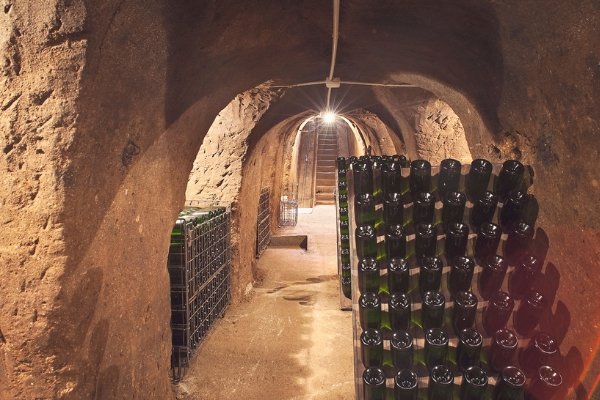
In the heart of the countryside surrounding Zagarolo, Cantina del Tufaio provides an experience that descends directly into the depths of the earth. Its spectacular tufa rock cave, hand-carved in the nineteenth century and plunging over sixteen meters below the surface, establishes a naturally stable microclimate where constant temperatures and humidity favor the slow, flawless maturation of the bottles.
The allure of this space rests precisely in the quiet embrace of matter and absolute silence: the porous, ancient volcanic rock cradles the wine like a subterranean cathedral. Here, a private tasting evolves into an intimate vertical journey, moving from the bright Latium sunshine down into the fresh penumbra of the earth, culminating in the sampling of the estate’s premier labels, highlighted by their artisanal Metodo Classico sparkling wines.
Nestled in the breathtaking scenery of the Castelli Romani, mere moments from the mythological waters of Lake Nemi, Cantina Costantini represents a cornerstone of the region’s agricultural endurance. Family traditions documented since the early 18th century narrate an unbroken lineage of viticultural dedication, where the cellar functions not just as a production facility, but as an elegant space of elite hospitality.
Private visits and curated tastings allow guests to draw close to the most authentic, unhurried dimension of Latium winemaking: the slow, noble rhythm of the countryside, the living memory of historic families, and a panorama that rolls gently down toward the Tyrrhenian coast. Upon special request, highly tailored and private experiences can be custom-built within their historic reserves.
In the historical core of the Frascati designation, Azienda Biologica De Sanctis interprets local winemaking traditions through a brilliant contemporary lens founded entirely upon certified organic practices, absolute sustainability, and deep reverence for the soil.
The vineyards thrive upon ancient volcanic soils saturated with rich minerals—a subterranean setting that imparts an unmistakable profile of freshness, sapidity, and intense aromatic tension to the wines. A private visit allows guests to read the surrounding landscape not merely as a beautiful panorama, but as the precise cradle of flavor: every glass narrates the direct dialogue between heritage grape varietals, climate, volcanic earth, and human artistry.
Within their private tastings, the signature mineral edge of the Frascati emerges with profound elegance: never as an artificial effect, but as the pure, organic signature of a volcanic ground that has nourished Rome’s enological reputation for millennia.
True luxury today is never found in mass excess. It rests in the absolute rarity of a place that cannot be replicated. In the premier wines of the Castelli Romani, this rarity is dictated entirely by the soil: a unique volcanic terrain formed by the ancient cataclysms of the Roman volcanic complex, capable of gifting the grapevines a personality that is luminous, intensely sapid, and beautifully vertical.
Malvasia Puntinata, Malvasia di Candia, Trebbiano, Bellone, and the noble red Cesanese—alongside other indigenous varietals tied strictly to Latium—find a distinct, powerful voice within these soils. They reject the standardized, soft profiles of mass-produced wines lacking identity; instead, they display a brilliant mineral freshness and an elegant structural tension.
In the region’s most attentive cellars, human intervention never forces or smothers this natural character; it accompanies it. The use of terracotta amphorae, stainless steel, fine oak barrels, or extended lees aging simply become different artistic tools used to interpret the exact same origin. The result is a wine that feels no need to copy other Italian regions, choosing instead to discreetly assert its own absolute difference.
.
Located just a short drive from the center of Rome, the Castelli Romani offer one of the most sophisticated day-trips for travelers desiring to step off the predictable tourist paths. In less than an hour from the historic center—depending on traffic and the chosen estate—one can seamlessly transition from the cold marble of city monuments to the soft, golden light of the vineyards, moving from crowded piazzas into the serene sanctuary of an underground cave.
The real value of these custom itineraries lies not merely in the tasting itself, but in the exclusivity of access. A private, closed-door visit grants the privilege of meeting the producers firsthand, exploring restricted historical environments closed to the general public, enjoying bespoke gastronomic pairings designed on-site, and experiencing wine as part of a grander, multi-sensory epic: historical, environmental, and deeply human.
Upon private request, these experiences can be flawlessly integrated with luxury private transfers, highly restricted vintage tastings, private vineyard luncheons, personal sommelier curations, or vertical masterclasses built around incredibly rare library vintages. It is a completely different way to experience Rome: not merely as an open-air museum city, but as the sovereign capital of an agricultural, aristocratic, and deeply volcanic territory, where every single chalice guards a flawless stratification of centuries.
The Castelli Romani should never be viewed as a lesser alternative to Italy’s other famous wine destinations. They represent an entirely different philosophy of luxury: more discreet, deeply intellectual, and incomparably rooted in the bedrock of Western civilization.
Here, wine does not emerge solely from the vine; it is born from a landscape that is simultaneously sacred, aristocratic, and deeply tied to the land. It is born of the tufa rock, the princely villas, the medieval legends, the papal courts, the families who continue to safeguard the soil, and a completely unique proximity to Rome.
For the modern traveler seeking private, authentic, and culturally dense experiences, a luxury wine escape to the Castelli Romani is far more than a simple afternoon tasting. It is a masterful, lateral entry into the grand history of the Eternal City: a true Rome beyond Rome—quieter, greener, and wonderfully secret.