Looking for something special
just for you ?
contact us
Bespoke Tours
Unique & Private
Experiences
Rome: The Eternal City - Power, Legacy, and the Art of Enduring
An Elite Masterclass in Permanence:
The Unsurpassed Legacy of the Eternal City
Every road, both literal and metaphorical, converges in Rome. Rome is not just a city; it is the operating system of Western civilisation, the code upon which law, governance, architecture, art, religion, and the very concept of empire were written.
For the elite traveler, the family office principal, the CEO, and the VIP who has already navigated the world’s great capitals, Rome is not a mere destination. It is a diagnosis, a place that reveals, with extreme clarity, the precise mechanisms by which power is acquired, exercised, preserved, and lost.
This article serves as the overarching narrative: the story of Rome as a supreme case study in civilizational and dynastic power, to which all other historical chapters connect.
Strategic Overview
- 1. Historical Layers of Power
- The Founding Myth & Generational Cycles
- 2. The Republic: Governance by Committee
- 3. The Empire: When the System Broke
- 4. The Fall: Supreme Adaptation & Metamorphosis
- 5. Cultural & Spiritual Repercussions: The Papal Layer
- 6. The Renaissance Layer: Cultural Capital
- 7. Modern Rome: The Living Palimpsest
- 8. The Curated Itinerary: A Layered Masterclass
- 9. Strategic Briefing: Frequently Asked Questions
Historical Layers of Power
The Founding Myth: Romulus, Remus, and the Power Play at the Center of Every Dynasty
Rome begins with a story of renegades and outlaws who refused to accept the status quo. The city’s genesis was fundamentally driven by rebels forging a new destiny, carving out a city chosen in a fertile and geographically perfect area.
Romulus and Remus were twin brothers, sons of Mars, the god of war, who is said to have impregnated a Vestal Virgin. Forced to be abandoned on the Tiber, they washed ashore and were raised by a she-wolf, as the legend goes. They founded a new city but subsequently clashed over its sacred boundaries, leading Romulus to slay Remus and name the city after himself.
This myth is far more than a legend; it is a diagnostic tool. It underscores a foundational truth regarding the Roman understanding of endurance and vision beyond fate: power is not granted, it is seized. The architect of a dynasty or an enterprise, much like the founder of an empire, must possess the resolve to execute what others deem unthinkable. From the Caesars to the Medicis, down to the global family offices and CEOs of the modern era, the cycle remains remarkably consistent:
The Generational Cycle of Power:
The first generation takes; the second generation builds; the third generation refines; the fourth generation forgets why it matters.
Rome’s founding myth stands as a perpetual warning: never forget the raw mechanics that established your position. The legacies that endure are those that fiercely preserve the memory, drive, and passion of their origins.
The Republic: The World’s First System of Governance by Committee
Established in 509 BCE following the expulsion of the final Etruscan monarch (precipitated by the violation of a noble family’s daughter), the Roman Republic stood as mankind’s premier experiment in governance by committee. The Roman Senate, the consuls, the tribunes, and the assemblies engineered a sophisticated blueprint of checks and balances that directly inspired the American Constitution, the French Republic, and the architecture of modern democratic frameworks.
However, the Republic was simultaneously a theater for hyper-refined elite competition. The Senate functioned not as a democratic forum, but as an exclusive assembly of Rome’s wealthiest, multi-generational lineages vying for influence, military command, territorial expansion, and commercial spoils. The genius of the Republic lay in its ability to channel elite ambition into institutional structures; such as elections, debates, and legal codification, rather than allowing it to fracture into open civil warfare.
For the principal family office steward, the Republic offers an enduring masterclass: the most stable ecosystems are those that afford the powerful a rigorous framework within which to compete. Longevity belongs not to those who attempt to eliminate competition, but to those who masterfully structure it through a value-added exchange. While much is made of Rome’s military might, its true power lay in the international commerce and inclusion it fostered.
The Empire expanded rapidly because it brought tangible value wherever it went; introducing robust infrastructure, aqueducts, public games, commercial networks, and a legal system designed to guarantee order. Conquered populations were permitted to retain their religions and traditions, provided they adhered to Roman law. It became both an honor and an economic advantage to be part of the Roman sphere, prompting many weaker tribes to actively seek its protection and access its vast privileges.
The Empire: When the System Broke
The Republic ultimately fractured because it could not withstand the sheer magnitude of its own triumphs. The unprecedented wealth flowing from conquered frontiers created socio-economic disparities that legacy institutions could no longer contain. Visionary military commanders: such as Marius, Sulla, Pompey, and ultimately Julius Caesar, recognized that imperial legions could effectively bypass the Senate entirely.
This systemic collapse triggered a century of civil conflict, culminating in Augustus establishing a centralized autocracy masterfully disguised as a restoration of the traditional Republic. Augustus created a structure where prosperity could flourish across the Mediterranean. His guiding philosophy centered on beauty as a driver of societal well-being and Pax Romana (Roman peace). He famously noted: ‘I found Rome a city of bricks and left it a city of marble.’
The Empire engineered by Augustus endured in the West for half a millennium, and in the East (as the Byzantine Empire) for nearly 1,500 years. It stands as the most resilient political architecture in Western history, sustained by a definitive axiom: centralise authority, decentralise administration.
While the Emperor held ultimate sovereignty, the provinces were expertly managed by local elites co-opted directly into the imperial framework.
For students of structural power, the imperial lesson is absolute: the most invincible organizations are those that grant local actors a profound stake in the central authority. Enduring legacies create vast networks of mutual obligation, rather than mere top-down hierarchies of command.
The Fall: What Happens When the Center Cannot Hold Predominant Power Plays
The transition of Rome was less a sudden collapse and more a profound metamorphosis. The traditional milestone of 476 CE – marking the deposition of the last Western emperor, is historically narrow. The decline truly accelerated after the reign of Emperor Marcus Aurelius, who, instead of leaving the empire in the hands of the individual best suited for the mantle, passed it to his son Commodus.
Commodus proved to be a tyrant and was ultimately assassinated by a conspiracy involving the Praetorian Guard. This sparked a volatile era defined by unstable successions and intense internal friction. The culmination of these power plays saw Constantine clash with rivals like Maxentius, ultimately leading to the defeat of Western contenders and the relocation of the imperial capital to Constantinople. This left a weakened Rome vulnerable to successive waves of barbarian incursions.
Yet, the Eastern Empire thrived for another millennium, while in the West, the Roman Church stepped into the vacuum to protect the city, seamlessly inheriting Roman administrative boundaries. This evolution laid the groundwork for continental jurisprudence and gave birth to the Holy Roman Empire, ensuring that Latin remained the undisputed language of global statecraft, science, religion, and diplomacy for centuries.
The authentic takeaway of Rome’s evolution is not one of decay, but of supreme adaptation. Rome did not vanish; it transformed into a new cultural and spiritual dynasty centered around the Vatican, establishing an entirely new institutional blueprint.
For the family office principal, this represents the ultimate insight: the objective is never to remain static, but to evolve in ways that flawlessly preserve your core essence, continuity, and assets against power struggles. The institutions that survive are those that fluidly change shape while maintaining absolute consistency of substance and an equitable exchange of value.
Cultural & Spiritual Repercussions
The Papal Layer: When Spiritual Power Replaced Temporal Power
Following the transition of the Western Empire, Rome’s authority was brilliantly reconstituted in a spiritual dimension. The Bishop of Rome, the Pope, ascended as the dominant figurehead in Western Christendom, wielding a sacred authority that routinely overshadowed secular monarchs. The establishment of the Papal States solidified this, granting the Holy See concrete temporal territories to mirror its cosmic influence.
The Vatican, encompassing St. Peter’s Basilica, the Sistine Chapel, and the Apostolic Palace, stands as the physical manifestation of this dual sovereignty.
For the high-net-worth traveler, the Vatican is far more than a spiritual sanctuary; it is an explicit monument to the relationship between legitimacy and raw power, an intersection that continues to govern influence globally, albeit through different mechanisms.
The Sovereign Lesson:
Raw power commands compliance, but absolute legitimacy commands time. Legacies endure when they can articulately justify their position, both to the world and to themselves.
The Renaissance Layer: When Rome Reinvented Itself Again
The Renaissance marked Rome’s spectacular third act. Emerging from the classical Empire and the medieval Papacy, the city re-engineered itself as the epicenter of a cultural renaissance that fundamentally remapped art, architecture, humanism, and philosophy.
The elite patrons of the Renaissance: sovereign popes, influential cardinals, and dynastic noble houses; leveraged high art and monumental architecture as precise instruments of power projection. Michelangelo’s vault in the Sistine Chapel, Raphael’s Stanze, and Bramante’s structural vision for St. Peter’s were not merely aesthetic pursuits; they were calculated geopolitical statements engineered to broadcast the absolute authority and peerless sophistication of their houses, engaging the population through unrivaled artistic expression.
For the modern visionary, the Renaissance delivers a clear mandate: artistic patronage is never an expense; it is a sophisticated, long-term strategy. The dynasties that leave an indelible mark are those that anchor their capital in beauty, intellect, and timeless creation, recognizing that culture is the most resilient, permanent currency of power.
Modern Rome: The Eternal City Today
Modern Rome exists as an intricate palimpsest, centuries literally built one on top of another. It is a living canvas continuously overwritten across millennia, where every historical epoch remains beautifully transparent beneath the surface.
[ MODERN ROME: NEOCLASSIC EUR & FUTURISTIC Nuvola Convention Center]
       │
[ RENAISSANCE / BAROQUE: Princely Palazzi & Fountains ]
       │
[ MEDIEVAL / PAPAL: Ecclesiastical Sovereignty ]
       │
[ ANCIENT ROME: The Imperial Operating System ]
This phenomenon is vividly captured within subterranean churches, where one can descend into underground layers spanning thousands of years of human history. It is embodied by the Pantheon, which operates fluidly as an ancient pagan temple turned consecrated Christian basilica, remaining a timeless architectural marvel.
It is echoed across the stones of the Colosseum, transitioning seamlessly from the site of Nero’s personal lake to an imperial amphitheater, a medieval stronghold, and onward to a global icon where millions of visitors ascend its ancient steps today.
For the discerning voyager, Rome behaves as a living laboratory of civilisational layering, an arena where antiquity is not entombed behind glass, but remains active, vital, and in perpetual dialogue with contemporary life. Rome is an open, sprawling museum with intertwined experiences waiting around every corner.
It remains a vibrant, cosmopolitan hub for ongoing elite conversations, international conventions, and creative innovations that continue to shape modern art and culture.
The Curated Itinerary: A Basic Insight To One Of Our Layered Masterclass
Given the immense depth of the capital, Roma Luxury advises a highly structured, layered methodology, dedicating distinct chapters of your residency to specific epochs of power:
Layer 1: Imperial Antiquity
Key Enclaves: The Etruscan Museum , The Capital Hill Museum , The Colosseum, Roman Forum, Palatine Hill, The Pantheon, and the Baths of Caracalla, the hill of amphora and a traditional culinary journey .
Strategic Focus: Deconstructing the machinery of mass control, analyzing how the Roman elite governed, entertained, and provisioned an urban population exceeding one million citizens.
Layer 2: Sovereign Papal Rome
Key Enclaves: The Vatican Museums, The Sistine Chapel, St. Peter’s Basilica, and Castel Sant’Angelo.
Strategic Focus: Investigating the symbiosis of spiritual power, temporal rule, and the institutional architecture of the Holy See.
Layer 3: Renaissance & Baroque Mastery
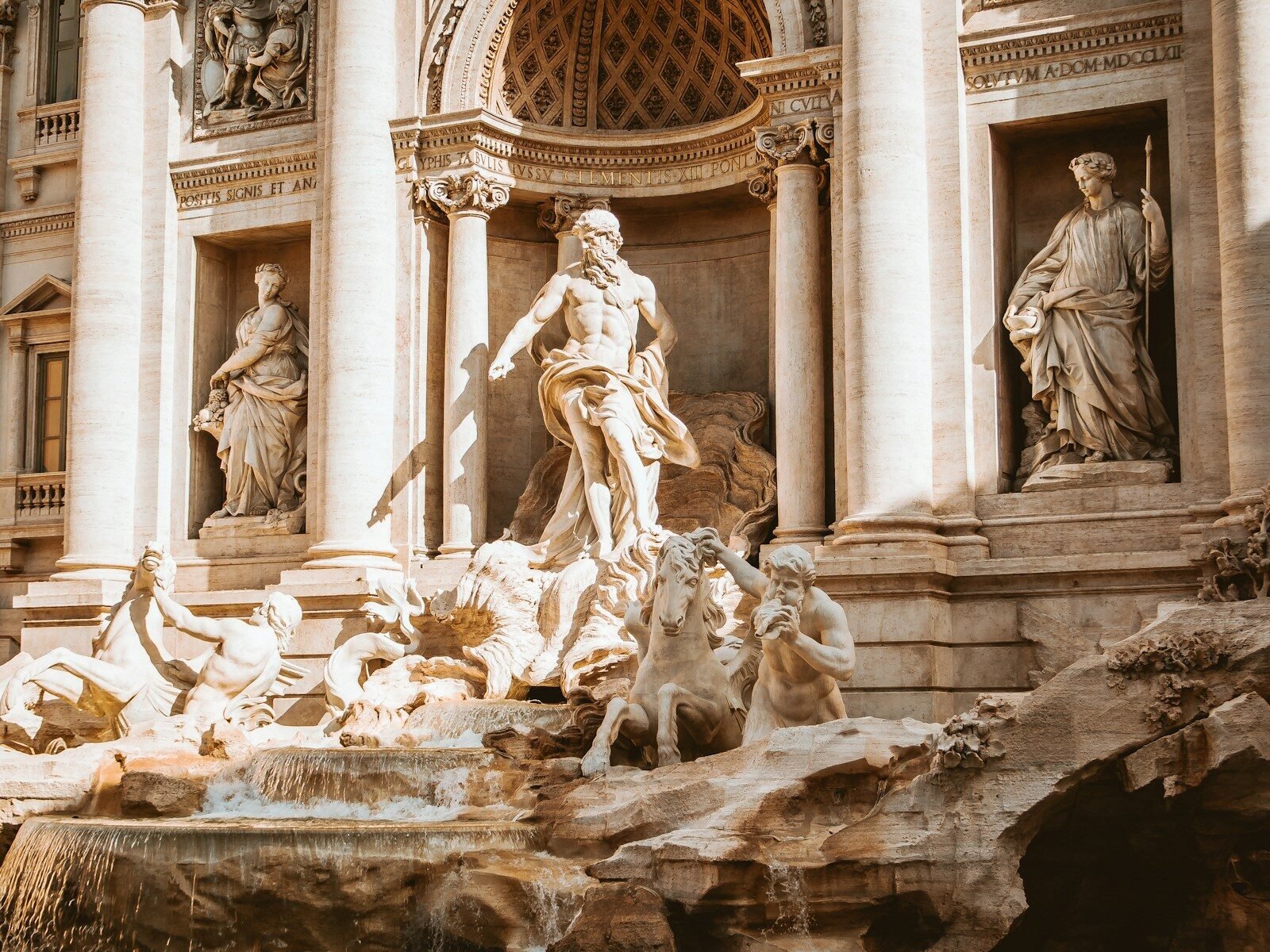
Key Enclaves: Galleria Borghese, Piazza Navona, the Trevi Fountain, and the Spanish Steps.
Strategic Focus: Analyzing the art of grand power projection utilized by the Popes; dissecting how they converted aesthetic beauty into undisputed political and religious leverage.
Layer 4: The Contemporary Palimpsest
Key Enclaves: The rationalist architecture of the EUR district, the historic enclaves of Trastevere, the best views of Rome, the modern Dolce Vita experience and culinary journey.
Strategic Focus: Witnessing the Roma’s modern cosmopolitan lifestyle and it’s daily harmony and enrichment between ancient foundations and modern capital.
The Roma Luxury Experience
Subject-Matter Elite Guides: Private access accompanied by historians, archaeologists, and cultural curators tailored to each historical layer.
White-Glove Cloistered Access: Exclusive & Private, after-hours admission to restricted sectors of the Vatican, exclusive villas of the Roman nobility, and secure archaeological vaults closed to the general public.
Aviation & Maritime Logistics: Bespoke private helicopter charters tracing the pathways of imperial retreats and luxury yacht provisions connecting Rome to the Mediterranean coast.
Palatial Gastronomy: Private dining engagements hosted inside ancestral Roman monuments and palazzi, featuring curated menus overlooking the illuminated ruins of the Forum or the Tiber River.
Frequently Asked Questions
How many days are recommended for an initial immersion into Rome?
Roma Luxury recommends a minimum of three to ten distraction-free days to properly honor the historical layers: dedicating isolated days to Imperial Antiquity, Sovereign Papal structures, and Renaissance/Baroque expressions respectively.
A ten-day residency allows for a deeper, entirely unhurried experience, seamlessly incorporating exclusive estate excursions into the surrounding satellite enclaves. Yet, this merely scratches the surface; with over 3,000 years of continuous creation, architectural marvels, and sublime art to behold, not even a lifetime is long enough to uncover the true depth of Rome and its surroundings.
How can I maximize my itinerary to include the surrounding regional highlights efficiently?
For the ultimate optimization of your time, we highly recommend integrating our signature Roma Luxury Heli-Tours into your itinerary. Tracing the pathways of ancient emperors from the air, these bespoke private flights provide a stunning, panoramic perspective of the region’s most dramatic landscapes.
They offer swift, breathtaking transit directly to the majestic ruins of ancient empires, secluded historic estates, and exclusive, multi-generational vineyards nestled in the volcanic hills—turning a standard day trip into a flawless, high-aviation masterclass that completely bypasses ground logistics.
When is the optimal window to experience the capital?
The ideal periods are the European spring (April to June) and autumn (September to October), offering temperate climates and majestic golden hour light conditions. The winter offers a highly private, cinematic atmosphere ideal for deep archival and architectural exploration.
While the summer months introduce higher thermal levels and dense commercial tourism, Roma Luxury transforms this season into an exclusive asset. From June to September, we offer The Italian Dolce Vita Experience: a masterfully curated escape featuring swift, private tours of the city illuminated by night, private daytime gallery access within perfectly climate-controlled museums, and seamless transit onward to the refreshing sea breezes of Capri and the Amalfi Coast, or the breezy sanctuaries of the Etruscan and Tuscan hills.
How does the capital interface logistically with the surrounding historical enclaves?
Rome operates as the absolute epicenter of this cultural landscape, serving as the majestic launchpad from which your private regional excursions seamlessly unfold:
Tivoli: Serves as the ultimate imperial and Renaissance retreat, home to the architectural marvels of Hadrian’s Villa and Villa d’Este.
Ostia Antica: Stands as a beautifully preserved window into the past, reflecting the bustling commercial maritime lifeline of the empire.
Castelli Romani: Embodies the refreshing, volcanic terroir favored for generations as the exclusive site for papal summer residencies.
Tarquinia: Unlocks the profound origins of regional power, showcasing spectacular, UNESCO-protected Etruscan frescoes and elite tomb architectures that predate Rome itself.
- Civita di Bagnoregio: Offers an unforgettable aesthetic experience—a breathtaking, medieval stone citadel suspended dramatically above a canyon, seemingly frozen in time.
- Lago di Bracciano: Blends pristine volcanic serenity with high-renaissance military prestige, dominated by the magnificent, fully intact Orsini-Odescalchi Castle overlooking the water.
Herculaneum: Offers a remarkably intact look at antiquity, showcasing the ultra-wealthy coastal playgrounds of the Roman equestrian and senatorial classes.
Can Roma Luxury guarantee complete isolation within the Vatican?
Yes. We specialize in coordinating exclusive, early-morning or after-hours private access to the Vatican Museums and the Sistine Chapel. This elite protocol allows you to contemplate Michelangelo’s masterworks in total serenity, completely divorced from public foot traffic.
How far in advance should private, exclusive access tours be secured?
In a global capital where millions of travelers arrive daily to admire its wonders, securing completely private, exclusive-access slots is an extraordinary logistical undertaking. These high-prestige, white-glove entries are strictly limited by authorities and are never readily available through standard channels.
Through our direct, elite connections with Rome’s cultural institutions, we hold the keys to these coveted time slots. To guarantee your preferred dates and absolute exclusivity, we highly recommend initiating your curation process six months in advance. However, should you require a last-minute residency, we are always prepared to leverage our network—even a week prior—to capture prime slots that may have unexpectedly become available due to sudden schedule shifts.
Is it possible to execute high-profile corporate or private summits in Rome?
Absolutely. We regularly facilitate private summits, family office boards, and elite gala events within historic private palazzi, cloistered Renaissance gardens, and unconsecrated ancient basilicas, managing all aspects of security, discrete catering, and elite staging.
What does Rome teach the modern principal regarding generational succession?
The entirety of Roman history is an epic case study in succession risk. From the initial founding to the Republic’s struggle to manage elite friction, and onward to the Empire’s reliance on adoption systems, the lesson is clear: the handoff of power from one generation to the next is the most volatile moment in the lifespan of any dynasty. The systems that endure are those that prioritize the survival of the institutional framework over individual ego.
What structural link exists between Rome and the Etruscan civilization?
Rome was under the direct stewardship of Etruscan monarchs (the Tarquin dynasty) for generations. The foundational tenets of Roman religious ritual, classical architectural engineering, civic symbols (such as the fasces), and societal hierarchies are deeply Etruscan. Exploring the elite necropolises of Tarquinia and Cerveteri within these experiences provides vital context for understanding Rome’s origins.
Which architectural monument remains most misunderstood by the casual traveler?
The Pantheon. While heavily frequented, few comprehend its status as a pinnacle of structural genius. Possessing the world’s largest unreinforced concrete dome, constructed nearly two millennia ago, it represents an unrivaled triumph of Roman materials science and geometry. Our private tours allocate extended, undisturbed sessions here alongside structural engineers to decode its ancient secrets.
Check Out Our Deep Dives:
- Tivoli: A Tale of Two Villas and Imperial Splendor
- Ostia Antica: Rome’s Ancient Port and Living History
- Castelli Romani: Volcanic Elegance and Papal Retreats
- Tarquinia: The Etruscan Legacy
- Herculaneum: The Wealthy Imperial Playground Preserved by Vesuvius
- Hadrian’s Villa: The Emperor Who Built a World
- Villa d’Este: Water, Power, and the Art of Spectacle
- Civita di Bagnoregio: The Fairy Tale City Suspended in Time
- Bomarzo: The Surreal Wonders of the Monster Park
- Gaeta: Coastal Grandeur and the Split Mountain
- Cerveteri: The City of the Dead and Etruscan Life
- Lago di Bracciano: Renaissance Grandeur and Volcanic Serenity
- Viterbo: The City of Popes and Ancient Springs